
In a world where toddlers can swipe a tablet faster than their parents, language learning toys have become the superheroes of early education. These playful gadgets don’t just entertain; they unlock the door to communication, turning little ones into budding bilinguals. Imagine your child effortlessly chatting away in Spanish while building a tower of colorful blocks—now that’s a sight to behold!
Overview of Language Learning Toys
Language learning toys enhance early education by providing interactive experiences. These toys promote vocabulary development through engaging activities such as puzzles and games. Kids enjoy the process while acquiring new words and improving pronunciation.
With a variety of options available, parents can choose toys that align with their children’s interests. Many language learning toys incorporate elements from different cultures, which exposes children to diverse languages. This approach fosters bilingualism in a fun and informal setting.
Toys like talking flashcards and electronic tablets facilitate language recognition and comprehension. As children interact with these tools, they develop essential communication skills. Studies indicate that play-based learning accelerates language acquisition, making these toys invaluable resources.
Learning happens naturally in a playful environment. Children feel motivated to explore languages as they recognize the connection between play and skill development. Engaging toys help spark curiosity, leading to a lifelong interest in learning languages.
Preschoolers benefit greatly from collaborative language learning toys. Group activities not only boost language skills but also enhance social interaction. Peer engagement reinforces vocabulary as children share and learn from one another.
Ultimately, language learning toys represent a strategic investment in a child’s educational journey. Their impact extends beyond mere entertainment, nurturing foundational skills that support academic success.
Benefits of Language Learning Toys
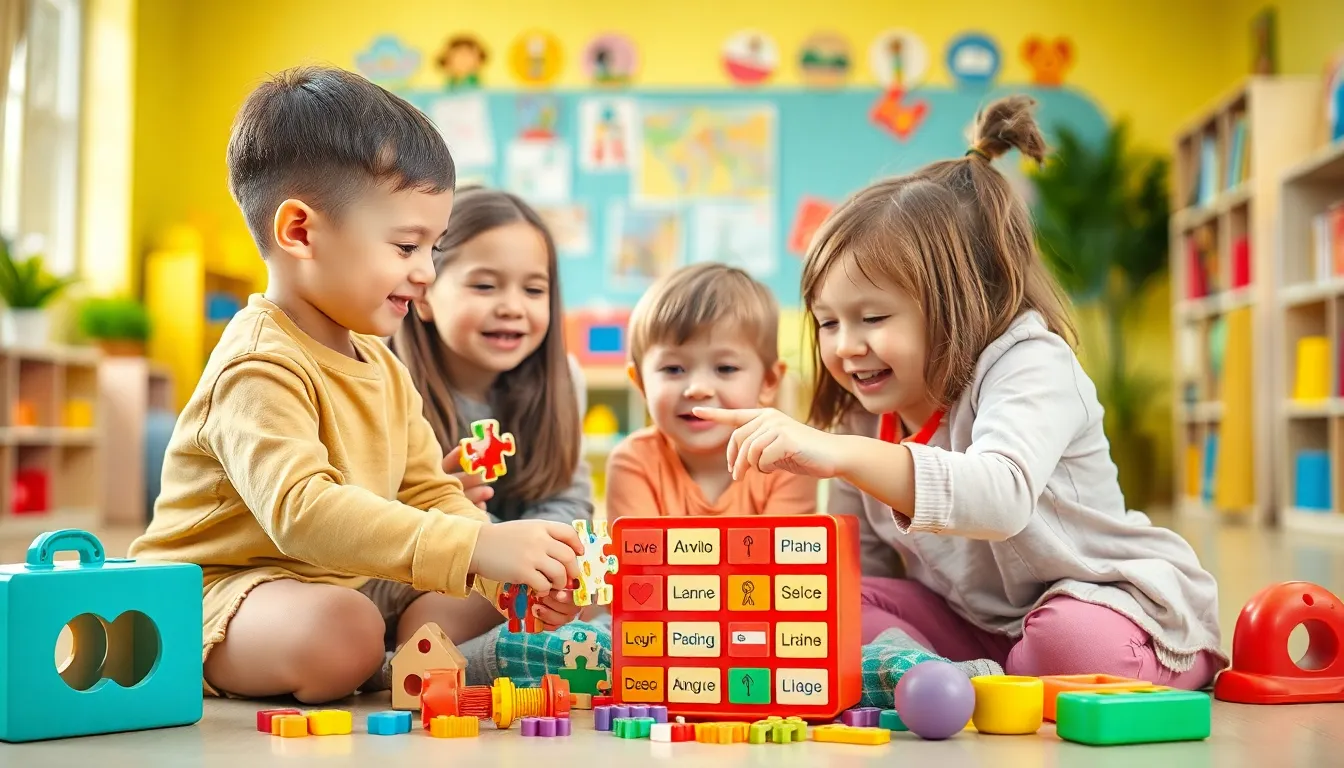
Language learning toys provide significant advantages for early education through engaging interactive experiences. They offer numerous benefits, such as fostering cognitive development and enhancing social skills.
Cognitive Development
Cognitive development receives a boost from language learning toys. Exposure to new vocabulary stimulates neural connections, encouraging children to think creatively. Interactive puzzles and games challenge young minds, leading to improved problem-solving abilities. Toys that incorporate multiple languages help children recognize speech patterns and sentence structures. Children develop memory skills by recalling words and phrases during play. This early exposure lays a foundation for later academic success, enabling better comprehension in various subjects.
Social Skills Enhancement
Language learning toys also enhance social skills, promoting interactions among peers. Group activities involving these toys encourage cooperative play, fostering teamwork and communication. Engaging with others while learning different languages helps children navigate conversations in diverse settings. Children practicing language skills together develop empathy and respect for cultural differences. As they share toys, they learn turn-taking and patience, vital aspects of social interaction. These experiences enrich their emotional intelligence, preparing them for future relationships in both academic and personal environments.
Types of Language Learning Toys
Language learning toys come in various forms, each designed to engage young learners effectively. The following categories highlight the best options for promoting language acquisition.
Interactive Books
Interactive books captivate children through engaging storytelling and hands-on activities. They often include sound buttons or flaps, making the reading experience dynamic. Many titles feature multicultural stories, exposing children to different languages and cultures. Additionally, these books support vocabulary expansion by encouraging kids to associate words with images. Parents appreciate how these interactive elements enhance focus and retention. With frequent reading, children increase their language skills while enjoying their favorite characters and narratives.
Educational Games
Educational games offer a fun way to learn language fundamentals. These games often involve puzzles, word searches, or matching activities that stimulate cognitive development. Many products incorporate themes from different cultures, allowing children to learn about diverse languages through play. Collaborative gameplay also fosters social skills, as kids work together to solve challenges. Through repetition and engagement, children gradually build vocabulary and improve comprehension. Parents benefit from observing their children actively learning while having fun.
Audio-Visual Tools
Audio-visual tools provide an immersive experience for language learning. Utilizing tablets or electronic devices, these tools engage children with interactive lessons, songs, and animations. Many applications support bilingual education, catering to various learning styles. Young learners often respond positively to the rhythmic and musical elements, aiding memory retention. Such resources promote language recognition and pronunciation skills through repetition. With regular use, children expand their vocabulary and gain confidence in language usage.
Choosing the Right Language Learning Toy
Selecting an appropriate language learning toy significantly impacts a child’s language acquisition journey. Factors such as age, interests, and developmental stage influence the choice.
Age Appropriateness
Age appropriateness plays a vital role in the selection of language learning toys. Toys designed for toddlers often focus on basic vocabulary and simple sounds, while those for preschoolers introduce more complex language concepts. An example includes interactive books targeting ages 2-4 that feature bright images and simple words. Age-appropriate toys engage children effectively, ensuring they encounter language challenges suited to their developmental milestones. Parents should consider manufacturer recommendations, which typically indicate suitable age ranges for optimal learning.
Features to Look For
When choosing language learning toys, several features enhance their effectiveness. Interactive elements, such as sounds, touchpads, and voice recognition, facilitate an engaging learning experience. Flexibility in language options supports exposure to multiple languages simultaneously. Toys that encourage social interaction, like collaborative games, further promote vocabulary retention and communication skills. Additionally, durability ensures these toys withstand rough handling often characteristic of young learners. Educators suggest selecting toys that incorporate storytelling, as narratives naturally foster language development while keeping children entertained.
Language learning toys play a crucial role in a child’s early education. They not only entertain but also nurture essential communication skills. By engaging with these toys, children can explore languages in a fun and interactive way, laying the groundwork for bilingualism.
Selecting the right toy can significantly enhance a child’s learning experience. Parents should consider their child’s interests and developmental stage to find the most suitable options. With the right tools, children can thrive in their language acquisition journey, building confidence and social skills along the way.
Investing in language learning toys is more than just a choice; it’s a commitment to fostering a love for learning that lasts a lifetime. By integrating play with education, these toys create a vibrant environment where language skills can flourish.


